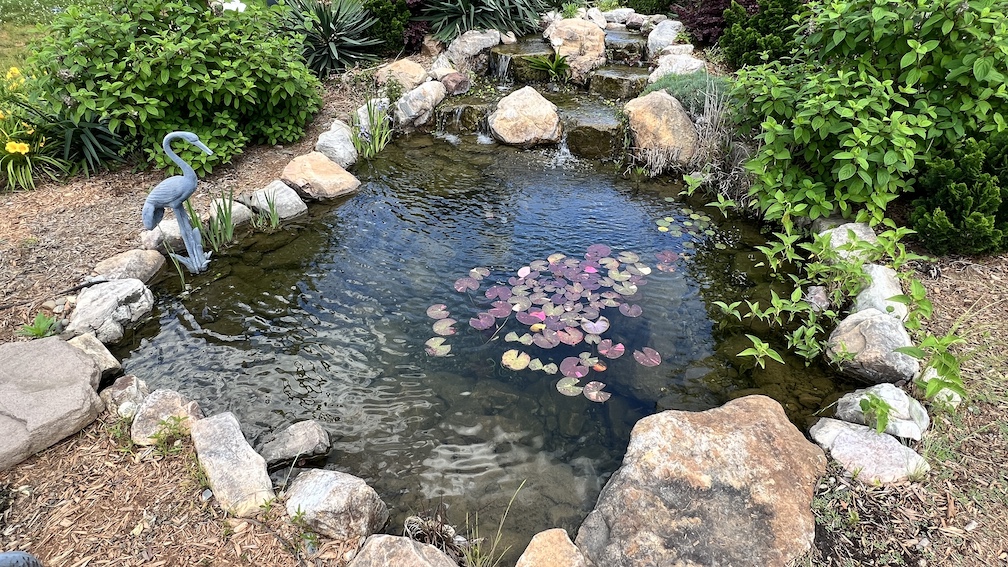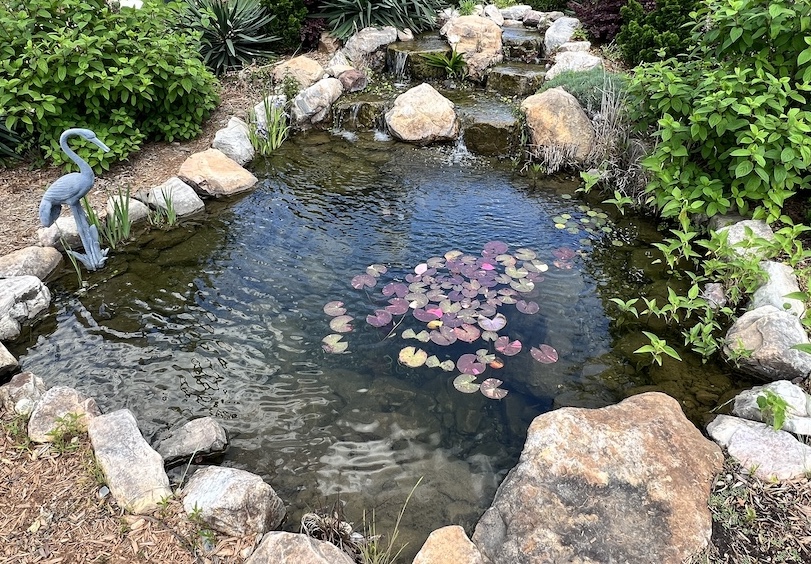
When constructing a water feature, one of the most important decisions is the choice of materials. Concrete, while widely used in construction, is not an ideal material for building water features due to its rigidity and susceptibility to cracking.
Concrete, particularly when compared to the superior flexibility and durability of a 45-mil EPDM liner, will likely cost more upfront, cause issue during its usage, and cost more to repair at the time of failure.
Concrete is prone to cracking because of its inability to adapt to shifting soil caused by water erosion, leading to significant leaks and costly repairs. In contrast, an EPDM liner offers a flexible, long-lasting solution that can be repaired and maintained with minimal expense.
Concrete’s Susceptibility to Cracking

Concrete is a rigid material. This rigidity poses issues when used in water tight construction. Underlying soil is prone to movement due to factors such as soil saturation, temperature changes, and settling. Even the slightest shifts of a fraction of an inch in the soil can cause concrete to crack. Once cracks form, water can seep into them, leading to further deterioration.
In environments where the soil may expand, contract, or move, concrete simply cannot adapt. Concrete’s inability to accommodate these changes results in inevitable failure over time. As the soil moves, cracks develop, which can widen and cause more significant damage, leading to leakage and erosion.
Concrete cracks not only ruin the appearance of the water feature but also result in costly repairs or complete reconstruction. Therefore, the rigid nature of concrete makes it a costly choice for water features that need to withstand dynamic environmental conditions.
Concrete’s vulnerability to movement is a particular issue in areas with loose soils. Water has a natural ability to erode soil, creating voids beneath the concrete. These voids result in uneven pressure across the slab, further increasing the risk of cracking. As the concrete cracks, water leaks become more pronounced, accelerating the erosion process and leading to even larger voids.
Even with reinforcement, concrete cannot fully prevent the effects of soil movement and water erosion. As a result, concrete is not well-suited for water features that are exposed to moisture and soil instability, as it is prone to damage in these conditions.
Why EPDM Rubber Liners are Superior

In contrast to concrete, a 45-mil EPDM rubber liner provides a flexible, durable solution for water feature construction. EPDM liners can expand and contract without compromising their integrity, with a 300% expansion rate before experiencing structural damage. This flexibility allows the liner to adapt to soil movement and pressure changes caused by water over time.
EPDM liners can also be encased in semi-flexible concrete cloth which is used to provide protection for the liner, not structural integrity to the water feature overall. By placing pressure on stones during construction, any gaps or voids beneath the substrate can be avoided because the liner moves and fills them in. This ensures an even distribution of pressure and prevents erosion issues that commonly plague concrete structures.
The combination of flexibility and adaptability makes EPDM liners a superior choice for water features, as they are far less likely to fail and much easier to maintain.
EPDM liners are designed to withstand exposure to water and extreme temperatures without degrading. Unlike concrete, which can become brittle and break over time, EPDM liners maintain their flexibility and resilience for decades. This makes them an ideal material for long-term water feature construction. Concrete, on the other hand, is vulnerable to environmental factors such as freeze-thaw cycles, which can cause spalling and cracking, leading to eventual failure.
Repair Costs of EPDM Liners vs Concrete

A critical advantage of EPDM liners is their ease of repair. In the event of an underground spring or excess groundwater, which can destabilize the subsoil beneath a water feature, an EPDM liner can be removed (or sometimes just pulled to the side) and the subsoil repaired. Once the subsoil is stabilized, the same liner can be reinstalled, providing a cost-effective solution with minimal disruption.
Concrete water features, however, require extensive coatings and, sometimes, demolition and replacement. If the underlying issue is not fully addressed, the same problem will likely recur. The labor and material costs associated with concrete repairs far exceed those for EPDM liners, making concrete not only more prone to failure but also much more expensive to repair.
The likelihood of concrete failure is considerably higher due to its rigidity and inability to adapt to changing soil conditions which occur every day with changing weather and seasons.
Once cracks develop, the cost of re-coating, possible demolition, removal, and reconstruction is substantial. Even small cracks can lead to significant leaks, which, if not addressed, cause further erosion and damage. Concrete’s inherent limitations mean it will eventually fail, resulting in expensive repairs and replacements over time.
An EPDM liner, by contrast, offers a much more forgiving and adaptable solution. Repairs can be made quickly and affordably by removing the liner, fixing the underlying issue, and reinstalling the same liner. This low-cost, high-flexibility approach ensures that any issues can be addressed with minimal expense, making EPDM liners a far more economical and reliable choice in the long term.
Conclusion
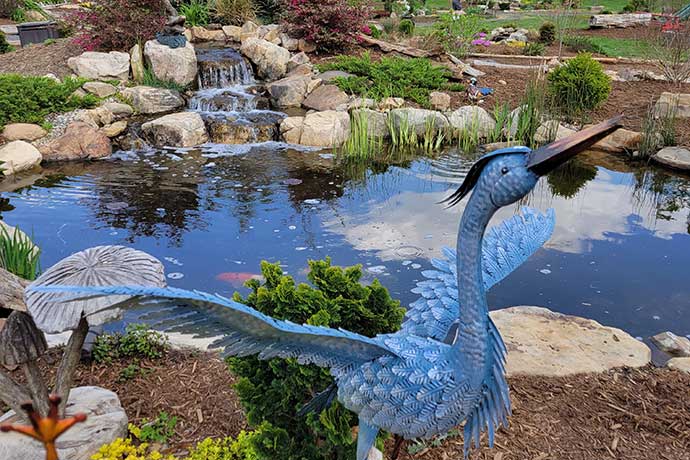
At Pond Country, we are committed to building durable, long-lasting water features that adhere to best practices. We would like to work with the project’s design but cannot with the current specification.
Given the known risks associated with concrete, including its high likelihood of failure and costly repairs, we must respectfully decline any projects where concrete is specified for the water feature. The liabilities and inevitable failures are too great. Instead, we recommend the use of a 45-mil EPDM liner to ensure a flexible, resilient, and cost-effective water feature that will stand the test of time.
Click here to see our variety of pond installation packages in various sizes and pricing.
Contact us today to see what amazing outdoor experience we can build for you.